What the New ISO 14001:2026 Means for Environmental Compliance

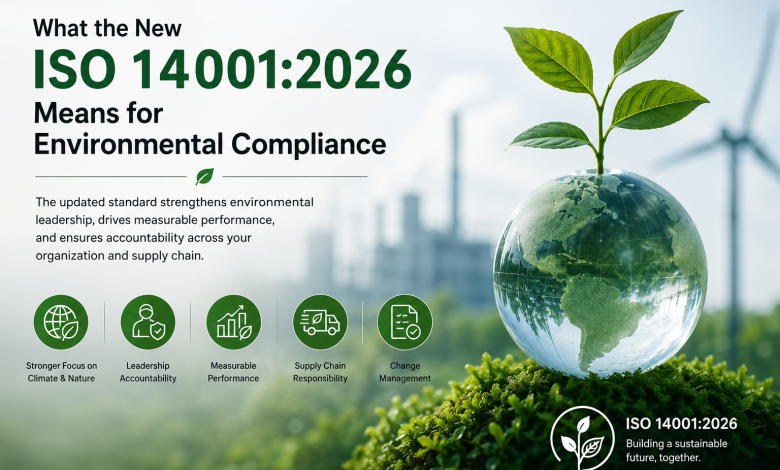
What the New ISO 14001:2026 Means for Environmental Compliance
Environmental compliance is changing rapidly. Around the world, governments are introducing stricter environmental regulations, investors are demanding greater transparency on sustainability performance, and customers increasingly prefer businesses that demonstrate environmental responsibility.
Against this backdrop, the anticipated revision of ISO 14001—currently expected to be published as ISO 14001:2026—has become one of the most discussed developments within the environmental management and conformity assessment community.
While organizations continue to operate under ISO 14001:2015, the upcoming revision is expected to reflect modern environmental challenges, emerging sustainability priorities, and evolving stakeholder expectations.
For organizations certified to ISO 14001, understanding these changes early can help ensure a smoother transition and continued compliance.
Understanding ISO 14001 and Its Importance
ISO 14001 is the internationally recognized standard for Environmental Management Systems (EMS). It provides organizations with a structured framework for identifying environmental impacts, meeting compliance obligations, reducing environmental risks, and improving environmental performance.
Since its publication in 2015, the standard has helped organizations across various industries establish systematic approaches to environmental management.
Certification to ISO 14001 demonstrates that an organization has implemented processes designed to:
Identify environmental aspects and impacts
Meet applicable legal and regulatory requirements
Reduce environmental risks
Improve environmental performance
Support continual improvement
As environmental expectations continue to evolve, so too must the standards that guide organizational practices.
Why ISO 14001 Is Being Revised
The environmental landscape today looks very different from when ISO 14001:2015 was developed.
Several factors are driving the need for revision:
Climate Change Considerations
Climate change has become a major business risk affecting organizations across industries. Businesses are increasingly expected to understand not only how they impact the environment but also how environmental changes may affect their operations.
Increased Sustainability Expectations
Customers, investors, regulators, and communities are placing greater emphasis on sustainability performance. Organizations are expected to demonstrate measurable progress rather than simply maintaining compliance.
Alignment with Emerging ESG Frameworks
Environmental, Social, and Governance (ESG) reporting continues to gain prominence globally. Future management system standards are expected to align more closely with sustainability reporting requirements and stakeholder expectations.
Technological Advancements
Digital monitoring systems, environmental analytics, and real-time reporting tools are transforming environmental management practices. Standards must evolve to remain relevant in this changing environment.
Expected Areas of Change in ISO 14001:2026
Although the final content of ISO 14001:2026 has not yet been officially published, industry discussions suggest several areas may receive greater attention.
Stronger Climate-Related Requirements
Organizations may be expected to consider climate-related risks and opportunities more explicitly within their environmental management systems.
This could affect:
Risk assessments
Strategic planning
Environmental objectives
Operational controls
Enhanced Environmental Performance Evaluation
Future requirements may place greater emphasis on measurable environmental outcomes rather than procedural compliance alone.
Organizations could be required to demonstrate clearer evidence of:
Environmental performance improvements
Resource efficiency gains
Emissions reductions
Waste management effectiveness
Expanded Stakeholder Considerations
Stakeholders increasingly influence environmental decision-making.
Organizations may need to strengthen processes for understanding and responding to the expectations of:
Regulators
Customers
Investors
Local communities
Supply chain partners
Greater Supply Chain Focus
Environmental impacts often extend beyond an organization’s direct operations.
Future revisions may encourage organizations to place greater emphasis on supplier performance, procurement practices, and lifecycle environmental considerations.
What This Means for Certified Organizations
Organizations currently certified to ISO 14001 should not wait until the revision is published before beginning preparations.
Early actions may include:
Reviewing Environmental Risks
Assess whether current risk management processes adequately address climate-related and sustainability-related risks.
Evaluating Environmental Objectives
Ensure objectives focus on measurable environmental performance outcomes.
Strengthening Compliance Monitoring
Review compliance registers and monitoring processes to ensure they remain current and effective.
Enhancing Employee Awareness
Educate management teams, environmental personnel, and internal auditors about expected developments.
Implications for Certification Bodies
Certification bodies will also play a critical role during the transition period.
They will need to:
Update audit methodologies
Train auditors on revised requirements
Develop transition programs for clients
Communicate timelines and expectations
Accreditation bodies will similarly need to ensure consistent implementation of revised certification requirements across the conformity assessment industry.
Looking Ahead
The anticipated ISO 14001:2026 revision represents more than a routine update. It reflects a broader shift toward environmental accountability, sustainability integration, and climate-conscious business practices.
Organizations that begin preparing now will likely experience smoother transitions, stronger environmental performance, and greater stakeholder confidence.
As environmental expectations continue to evolve, ISO 14001 remains one of the most valuable tools available for organizations seeking to demonstrate responsible environmental management and long-term sustainability.