THE ISO 9001 AND MARKET VALUE OFFERING IN AFRICAN MANUFACTURING,OIL AND GAS.

The Blueprint for Resilience: Leveraging ISO 9001 as a Market Value Offering in African Oil, Gas, and Manufacturing.

In the dynamic and often unforgiving landscape of African industry, where economic realities shift with the volatility of global commodity prices and the pressing need for local capacity building, a quiet yet profound transformation is taking place. For decades, the pursuit of ISO 9001 certification was viewed by many organizations across the continent as a mere administrative hurdle, a costly exercise in documentation required to satisfy the compliance departments of multinational clients, particularly in the oil and gas and manufacturing sectors. It was often perceived as a static badge of honor, a plaque to hang in a reception area, rather than a living, breathing engine for growth. However, as African economies navigate a complex era defined by inflationary pressures, supply chain disruptions, heightened global competition, and an escalating demand for sustainable and ethical practices, the value proposition of a professionally implemented ISO 9001 Quality Management System has fundamentally shifted. It is no longer simply about meeting a standard; it is about forging a strategic asset that can dictate market relevance, ensure financial survival, and unlock unprecedented opportunities in a fiercely contested arena.
To understand this evolution, one must first appreciate the current economic crucible within which African service providers in oil and gas and manufacturing must operate. The continent’s economic landscape is characterized by a duality of immense potential and profound vulnerability. In the oil and gas sector, the global push for energy transition places immense pressure on traditional fossil fuel operators to demonstrate efficiency, environmental stewardship, and operational excellence to attract increasingly scarce investment capital. Simultaneously, local content policies across nations like Nigeria, Angola, Ghana, and Mozambique are mandating greater participation by indigenous firms, thrusting local service companies into roles of greater responsibility that require world class reliability. In manufacturing, the African Continental Free Trade Area promises a vast integrated market, but it also exposes local manufacturers to intense competition from established international players. To survive and thrive in this environment, where margins are squeezed by the high cost of capital, erratic power supply, and logistical bottlenecks, a company cannot afford inefficiency, rework, or reputational damage. This is precisely where a strategically deployed ISO 9001 framework ceases to be a cost center and becomes the very architecture of competitive advantage.
The core of this transformed value offering lies in the word “professionally tailored.” A generic, copy pasted quality manual is not only useless but dangerous in the current economic climate. It creates a façade of compliance that inevitably crumbles under the scrutiny of a discerning client audit or, worse, during a critical operational failure. For African service companies, the market value offering of ISO 9001 must be built on a foundation of contextualized rigor. It is about moving from a culture of inspection to a culture of prevention. In the oil and gas industry, where non productive time can cost hundreds of thousands of dollars per day, a quality management system that genuinely embeds risk based thinking into every operational process is not just a quality tool; it is a financial instrument for risk mitigation. When a local logistics provider for an offshore drilling operation implements ISO 9001 not as a checklist but as a systemic approach to managing its fleet maintenance, crew competency, and emergency response procedures, it dramatically reduces the probability of downtime for its client. This reliability translates into contract renewals, preferred supplier status, and the ability to command a pricing structure that reflects the reduced risk profile the company offers. The market value, therefore, is not in the certificate itself but in the demonstrable reduction of operational risk and the enhancement of asset integrity that the system enables.
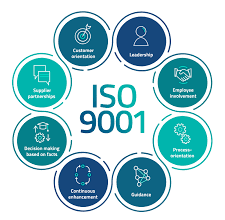
Similarly, in the manufacturing sector, the economic realities of Africa often involve navigating unpredictable supply chains for raw materials and managing production with intermittent utilities. A professionally tailored ISO 9001 system addresses these challenges head on. Instead of viewing the standard as a constraint, a savvy manufacturer uses its requirements for process control and supplier management to build resilience. By applying the Plan Do Check Act cycle to its procurement process, a manufacturer can develop robust strategies for supplier diversification, safety stock optimization, and contingency planning that buffer the business against global supply shocks. Furthermore, the emphasis on continuous improvement, a cornerstone of the standard, becomes a critical driver for cost reduction. In an environment where energy costs are a significant operational expenditure, a structured quality management system facilitates the systematic analysis of production processes to identify waste, reduce energy consumption per unit of output, and optimize material usage. This lean approach, driven by the discipline of ISO 9001, directly improves the bottom line, allowing the manufacturer to offer competitive pricing in the AfCFTA market without sacrificing profitability. The certificate becomes a testament to operational maturity, signaling to potential partners and financiers that the business is managed with a level of discipline that mitigates investment risk.
The action plan for African service providers to realize this market value must be deliberate, phased, and deeply integrated with business strategy. The first and most critical phase is the shift from a compliance mindset to a strategic leadership mindset. This begins with the C suite. Too often, the implementation of ISO 9001 is delegated to a quality manager or a consultant, with executive leadership only stepping in for the final management review meeting. For the system to be a genuine market value offering, the CEO and senior leadership must champion it as a business transformation project. The action item here is for leadership to articulate the “why” behind the certification beyond client demand. Is it to reduce operational costs by a specific percentage? Is it to break into a new, high value market segment, such as subsea engineering services or automotive component manufacturing? Is it to attract foreign direct investment or private equity? By defining clear, measurable business objectives for the QMS, leadership ensures that every subsequent step is aligned with value creation. This executive commitment must be visible, demonstrated through the allocation of adequate resources, active participation in system design, and the consistent communication of quality objectives as business objectives.
Following this strategic alignment, the action plan must focus on a process based approach that maps the organization’s unique value chain. The common pitfall for many African firms is to structure their QMS around the clauses of the ISO 9001 standard, creating a document control system that exists in a silo. The professional approach is to map the core business processes from the moment a client inquiry is received to the final delivery of service and receipt of payment. For an oilfield services company, this might involve mapping processes for tendering, mobilization, service delivery, reporting, and demobilization. For a manufacturer, it would encompass design, procurement, production planning, production, quality control, warehousing, and distribution. The action here is to conduct a thorough process mapping exercise, involving the people who actually do the work. This collaborative effort serves two critical purposes. First, it ensures that the resulting procedures are practical, efficient, and reflective of operational reality, not theoretical ideals. Second, it builds ownership and engagement among the workforce, transforming them from passive recipients of instructions to active participants in process improvement. This exercise naturally identifies waste, bottlenecks, and areas of risk, providing the baseline data from which the QMS can drive tangible improvements. The output is not a bulky manual but a streamlined set of interconnected processes that clearly show how value flows through the organization and where controls are necessary to ensure consistency.
A pivotal element of the action plan, particularly given the economic realities of Africa, is the intelligent integration of technology. The days of massive ring binders filled with controlled documents are not only inefficient but also a liability in a fast paced operational environment. The cost of implementing a full scale Enterprise Resource Planning system may be prohibitive for many small and medium sized enterprises, but the strategic use of affordable, scalable digital solutions is non negotiable for a professionally tailored system. The action is to leverage cloud based document control platforms, mobile applications for nonconformance reporting, and simple digital dashboards for tracking key performance indicators. For a manufacturing plant in a remote location, using a cloud based system allows for real time quality data entry from the production floor, enabling immediate corrective action when a process drifts out of specification. For a service company with personnel spread across multiple rig sites or operational bases, a mobile app for reporting incidents, non conformances, and maintenance requests ensures that data is captured instantly and transparently, preventing the delays and information loss that plague paper based systems. This digital layer does more than just streamline compliance; it creates a data rich environment. The data generated on defect rates, customer complaints, supplier performance, and process cycle times becomes the fuel for the management review process. Instead of a superficial review, the management team can engage in data driven discussions, making strategic decisions based on trends and root cause analyses. This capability to harness data for decision making is a powerful market differentiator, signaling to sophisticated clients that the organization is modern, agile, and in control.
The next critical phase in the action plan involves the development of a true quality culture, which is perhaps the most challenging yet most rewarding aspect of professional ISO 9001 implementation. A system can have the most elegantly designed processes, but if the people executing them do not understand the rationale or feel empowered to identify and solve problems, the system will fail to deliver its intended value. In many African contexts, there can be a hierarchical culture where frontline workers are conditioned to follow instructions without question and where raising a problem is sometimes perceived as a personal failure. A professionally tailored QMS must actively dismantle this paradigm. The action is to institute a comprehensive competency based training program that goes beyond procedural instruction. It involves training employees not just on what to do, but on why the process exists, what risks it mitigates, and how their role contributes to customer satisfaction and business success. More importantly, it involves creating safe channels for raising non conformances and near misses without fear of retribution. When a technician on a manufacturing line is empowered to stop production when a defect pattern emerges, and is celebrated rather than punished for doing so, the cost savings from preventing a batch of defective product are immense. This shift from a culture of blame to a culture of learning and continuous improvement is the true engine of the QMS. It fosters a workforce that is engaged, proactive, and invested in the company’s success, directly countering the high turnover and skill drain that plague many industries. This cultural transformation becomes a compelling part of the market value offering, as it assures clients that the organization has the internal capability to sustain high performance consistently, not just when management is watching.

Crucially, the action plan must explicitly link the QMS to financial performance and strategic growth, which is the ultimate expression of market value in the face of economic realities. The traditional view of ISO 9001 as a cost of doing business is replaced by a view of it as a driver of revenue and profitability. The first financial lever is cost reduction. By systematically tracking and analyzing non conformances, rework, and scrap, the QMS provides the mechanism to identify and eliminate the hidden factory the waste that consumes resources without adding value. In a manufacturing context, reducing scrap rates by even a few percentage points can translate into substantial annual savings in material costs. In a service context, reducing the recurrence of a common operational error eliminates the cost of corrective actions and prevents potential penalties from clients. The second lever is revenue growth. A mature, professionally implemented QMS enables a company to pursue higher margin contracts. In the oil and gas industry, international oil companies and major engineering, procurement, and construction contractors use a contractor’s management system capability, often evidenced by ISO 9001 certification, as a primary pre qualification criterion. However, a company with a robust, data driven QMS that can demonstrate a trend of improvement, low nonconformance rates, and effective corrective action can move from being a subcontractor to a prime contractor, capturing a larger share of the value chain. Similarly, in manufacturing, certification is often the price of entry for supplying to multinational corporations or for exporting under the AfCFTA. The QMS, when used strategically, becomes a marketing and business development tool, opening doors that remain closed to non certified or poorly certified competitors.
Furthermore, the action plan must address the unique challenge of maintaining system integrity during periods of economic hardship. African economies often experience currency devaluation, inflation, and fluctuating liquidity. In such times, there is a temptation to cut corners, reduce training budgets, and let the quality management system lapse, viewing it as a non essential overhead. A professionally tailored approach anticipates this by embedding cost effective, low burden processes that demonstrate their value continuously. The action here is to design the QMS to be lean from the outset. Instead of creating exhaustive procedures for every minor task, the focus should be on the processes that are critical to quality, safety, and delivery. The management review process should be streamlined to focus on the key performance indicators that matter most to business survival and growth during tough times, such as cash flow, customer retention, and operational efficiency. The system should be designed to be resilient, with cross training built into the competency management process so that the departure of a key employee due to economic pressures does not create a critical knowledge gap. In this sense, a well designed QMS acts as a stabilizing force, providing the discipline and control necessary to navigate volatility. It ensures that even when external conditions are challenging, internal processes remain consistent, preventing the operational chaos that can exacerbate financial distress.
To truly unlock the market value offering, African service providers must leverage their ISO 9001 certification to tell a compelling story to the market. In the oil and gas and manufacturing sectors, reputation is everything. The action is to transform the certification from a line item on a proposal into a central pillar of the company’s brand identity. This involves developing case studies that demonstrate tangible results. Instead of simply stating “we are ISO 9001 certified,” a company should communicate, “by implementing a risk based quality management system, we reduced our client reported non conformances by sixty percent over two years, resulting in a forty percent reduction in unplanned downtime for our drilling clients.” Or, “through the continuous improvement framework of our ISO 9001 system, we optimized our production process to achieve a fifteen percent reduction in energy consumption per ton, allowing us to maintain pricing stability for our customers despite rising utility costs.” This evidence based marketing speaks directly to the economic concerns of clients. It shows that the service provider understands the business realities of its customers and has built its operations to deliver reliability, efficiency, and value. This approach elevates the company from a commodity vendor to a strategic partner, a distinction that is invaluable in securing long term contracts and weathering market downturns.
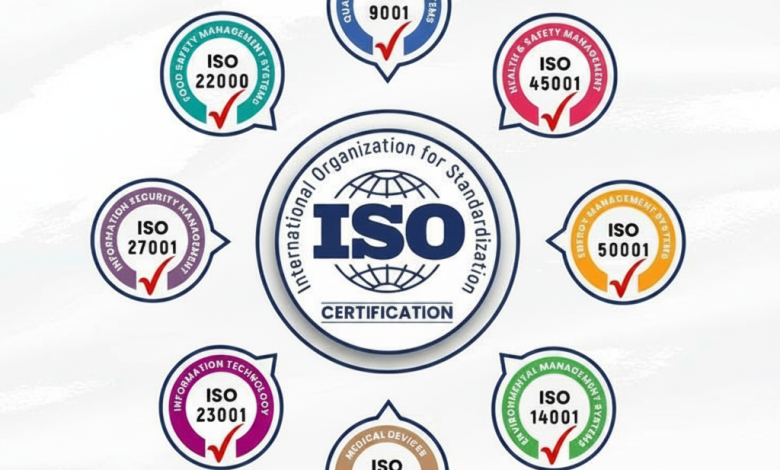
The role of external expertise in this journey cannot be overstated, but the engagement must be structured to build internal capability, not create dependency. The action plan should involve selecting a consultant or certification body that understands the specific context of the African oil and gas and manufacturing sectors. The goal of the engagement should be knowledge transfer. A professional consultant acts as a coach, guiding the internal team through the process of designing, implementing, and owning the system. The emphasis should be on developing internal auditors and management representatives who are not just custodians of the system but are skilled internal consultants who can drive continuous improvement long after the consultant has left. This approach ensures that the investment in certification yields long term dividends and that the system evolves with the business. Similarly, the selection of a certification body should be strategic. While cost is always a factor, choosing a body that is globally recognized and respected by the target client base is critical. A certificate from a body that is not accredited by the International Accreditation Forum may not carry the weight needed to open doors with major international clients. The action is to view the certification audit not as a final exam to be passed, but as a value added assessment that can provide insights into areas for further improvement.
Looking forward, the future of ISO 9001 in the African context is inextricably linked to the broader imperatives of sustainability and the energy transition. The latest iteration of the standard emphasizes a greater focus on risk based thinking and the context of the organization. This provides a natural pathway for integrating environmental, social, and governance considerations into the core management system. For an oil and gas service provider, this means using the QMS to manage the risks associated with environmental incidents and to systematically improve its environmental performance, a growing concern for investors and operators. For a manufacturer, it means using the process approach to manage the sourcing of raw materials, ensuring they are from sustainable and ethical sources, and to optimize processes to reduce waste and carbon footprint. The action for forward thinking African firms is to align their QMS with these emerging requirements. By doing so, they not only maintain compliance but position themselves as leaders in sustainable operations. This alignment opens up new market opportunities, particularly with international companies that have aggressive sustainability targets and are seeking partners who can support their goals. It also makes the organization more attractive to impact investors and development finance institutions that are increasingly active in supporting sustainable industrialization in Africa.
In conclusion, the journey toward ISO 9001 certification for African service providers in the oil and gas and manufacturing sectors is no longer a simple matter of administrative compliance. In an era defined by economic volatility, intense competition, and the transformative potential of the African Continental Free Trade Area, it is a strategic imperative. The market value offering of a professionally tailored quality management system lies not in the certificate itself, but in its capacity to build operational resilience, drive cost efficiency, mitigate risk, and unlock access to premium markets. It provides the disciplined framework needed to navigate the complexities of local content requirements, supply chain disruptions, and the global energy transition. The action plan for success is clear and requires a fundamental shift in perspective. It demands strategic leadership commitment that elevates quality to a core business objective. It necessitates a process based approach that is designed around the organization’s unique value chain, not a generic template. It calls for the intelligent application of technology to enable real time data driven decision making. It requires a concerted effort to cultivate a culture of quality, empowering the workforce to be proactive agents of continuous improvement. And crucially, it demands that the system be explicitly linked to financial performance, serving as a tool for cost reduction, revenue growth, and market differentiation.
For those African businesses that embrace this sophisticated view, the ISO 9001 standard transforms from a burden into a formidable competitive weapon. It becomes the architecture that supports sustainable growth, the assurance that wins the trust of discerning clients, and the operational discipline that ensures survival and prosperity in the face of economic adversity. The path is rigorous and demands commitment, but the reward is a business that is not only certified but is fundamentally more resilient, more efficient, and more valuable. As the African industrial landscape continues to evolve, the companies that will lead are not necessarily those with the largest balance sheets, but those with the most robust systems. They are the ones who understand that in a world of uncertainty, quality is not just a specification to be met; it is the very foundation of enduring market value. The time for African service providers to seize this opportunity is now, to move decisively beyond the certificate and to build the professionally tailored quality management systems that will define the next generation of industrial excellence on the continent. This is not merely about adhering to a standard; it is about setting a new standard for African industry, one where quality, resilience, and strategic value converge to create a powerful and lasting competitive advantage.